Sandra GARRIDO, University of Sydney, Sydney, Australia
https://scholar.google.com/citations?user=1sM6ImAAAAAJ&hl=en
https://profiles.sydney.edu.au/sandra.garrido
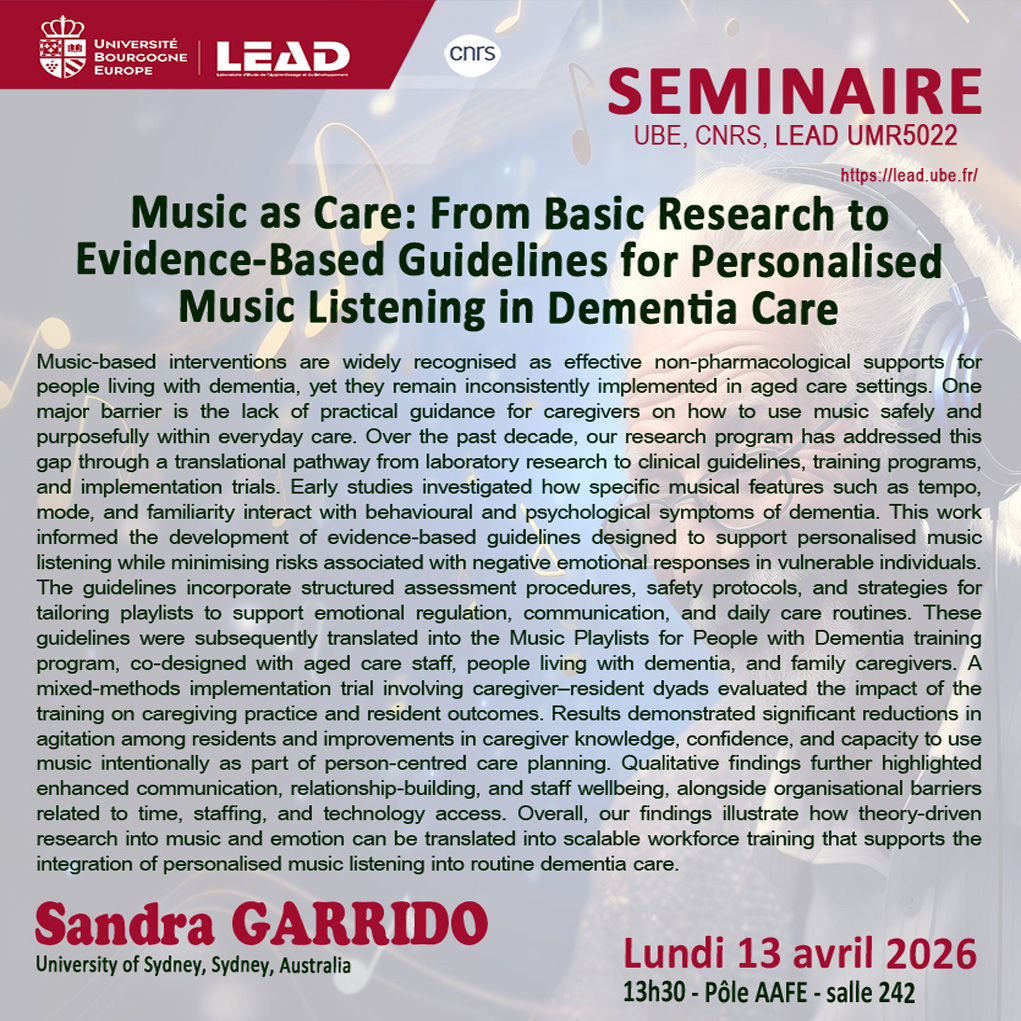
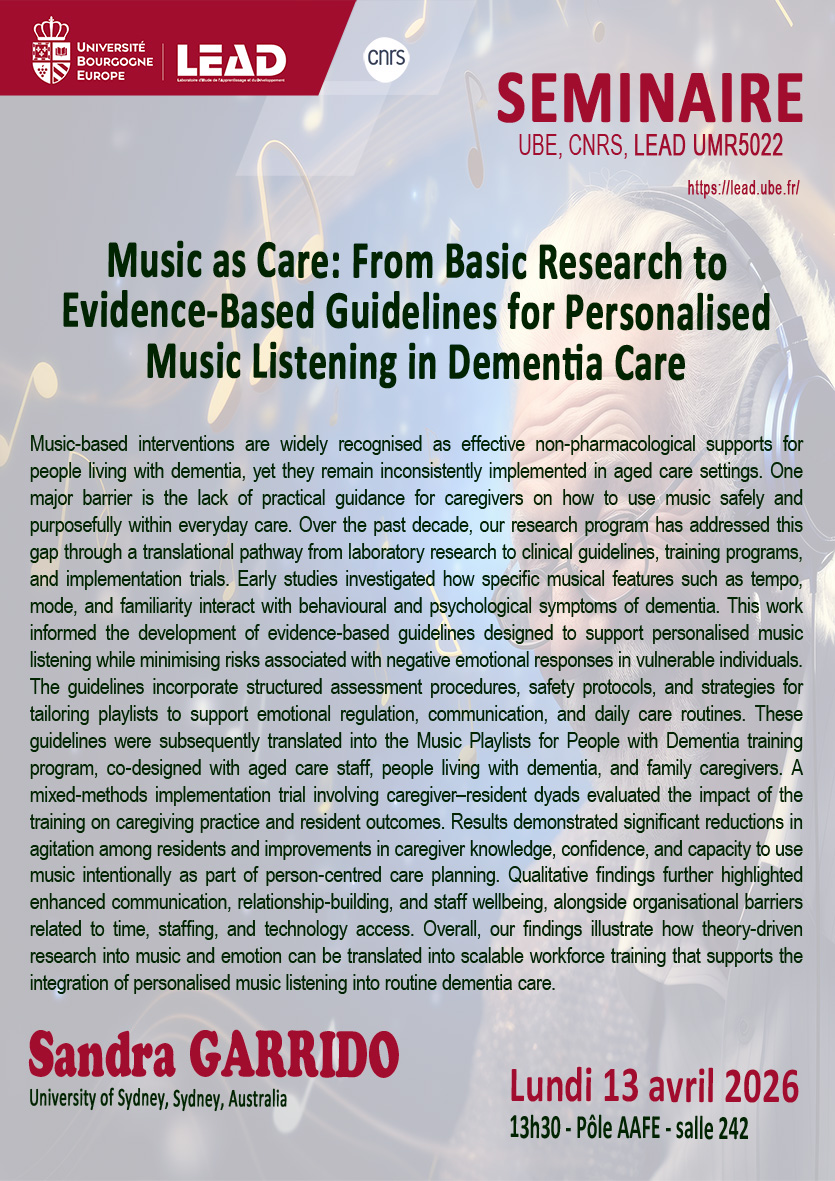
Music-based interventions are widely recognised as effective non-pharmacological supports for people living with dementia, yet they remain inconsistently implemented in aged care settings. One major barrier is the lack of practical guidance for caregivers on how to use music safely and purposefully within everyday care. Over the past decade, our research program has addressed this gap through a translational pathway from laboratory research to clinical guidelines, training programs, and implementation trials. Early studies investigated how specific musical features such as tempo, mode, and familiarity interact with behavioural and psychological symptoms of dementia. This work informed the development of evidence-based guidelines designed to support personalised music listening while minimising risks associated with negative emotional responses in vulnerable individuals. The guidelines incorporate structured assessment procedures, safety protocols, and strategies for tailoring playlists to support emotional regulation, communication, and daily care routines. These guidelines were subsequently translated into the Music Playlists for People with Dementia training program, co-designed with aged care staff, people living with dementia, and family caregivers. A mixed-methods implementation trial involving caregiver–resident dyads evaluated the impact of the training on caregiving practice and resident outcomes. Results demonstrated significant reductions in agitation among residents and improvements in caregiver knowledge, confidence, and capacity to use music intentionally as part of person-centred care planning. Qualitative findings further highlighted enhanced communication, relationship-building, and staff wellbeing, alongside organisational barriers related to time, staffing, and technology access. Overall, our findings illustrate how theory-driven research into music and emotion can be translated into scalable workforce training that supports the integration of personalised music listening into routine dementia care.